
HDC Handbook
Pieces
This page explains the seven HDC piece types. Each piece has a short rules summary and five movement diagrams showing its targets relative to the reference layer.
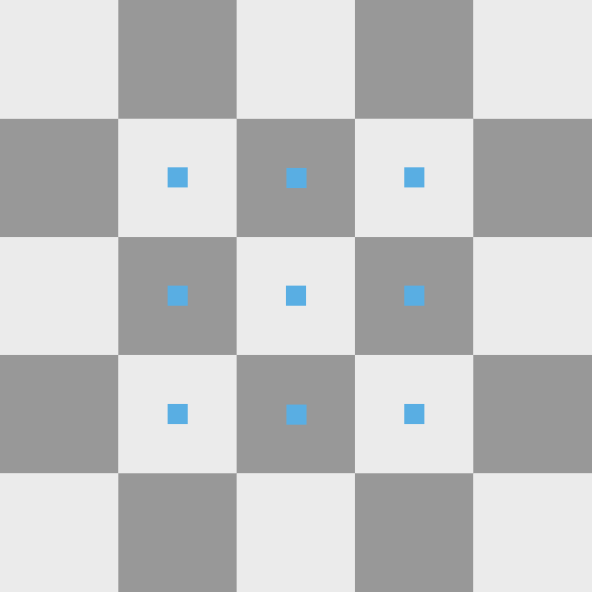
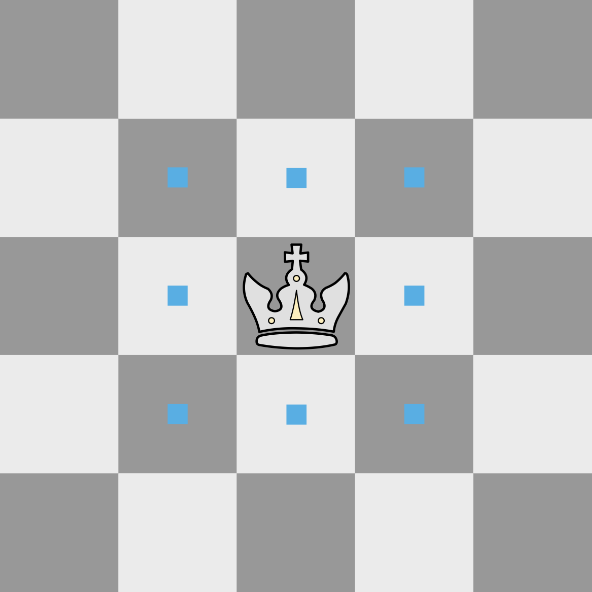
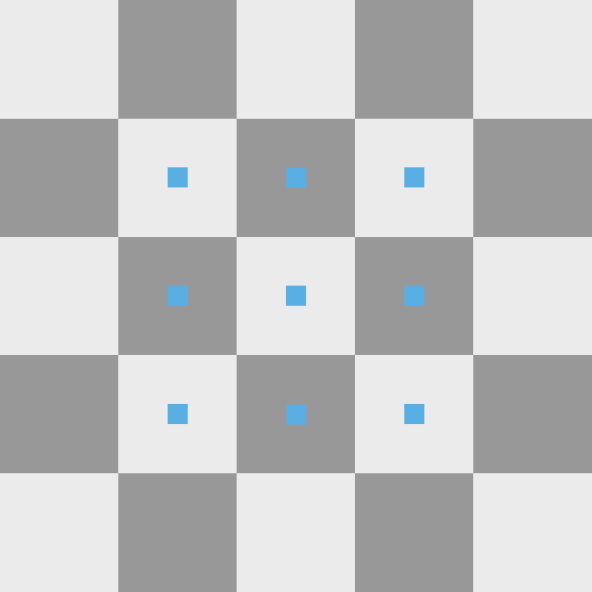
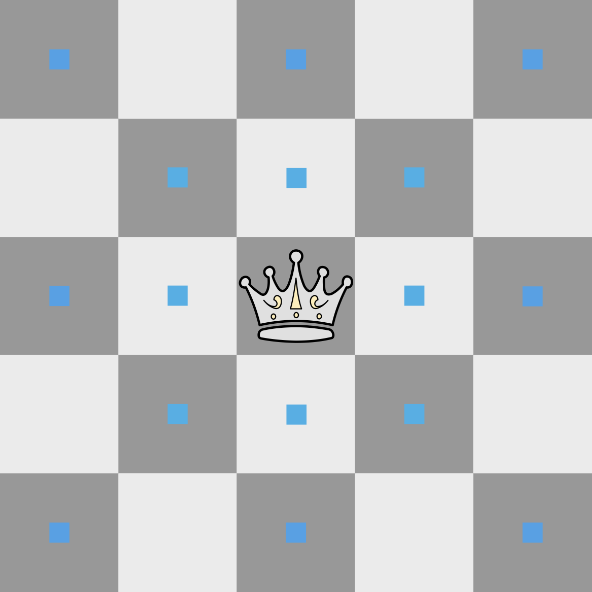
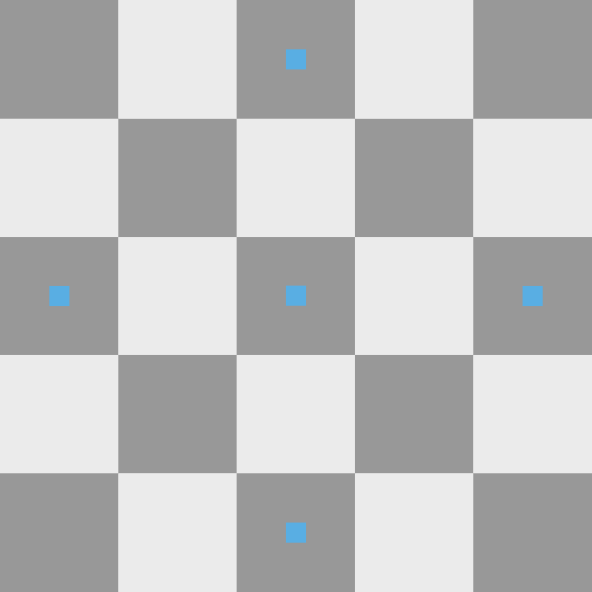
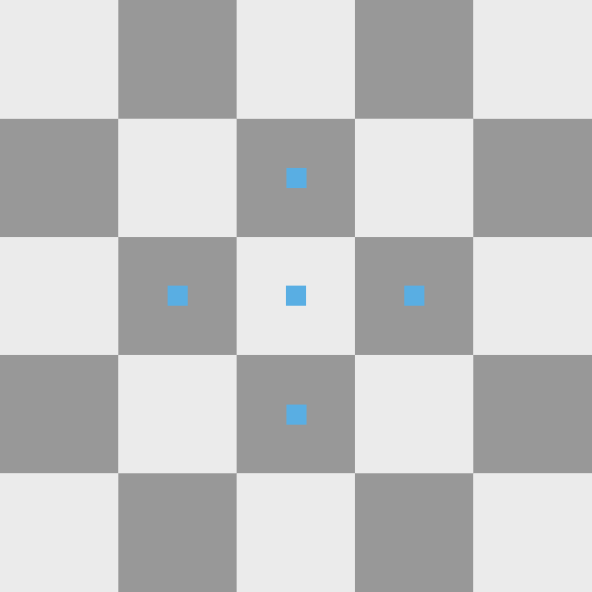
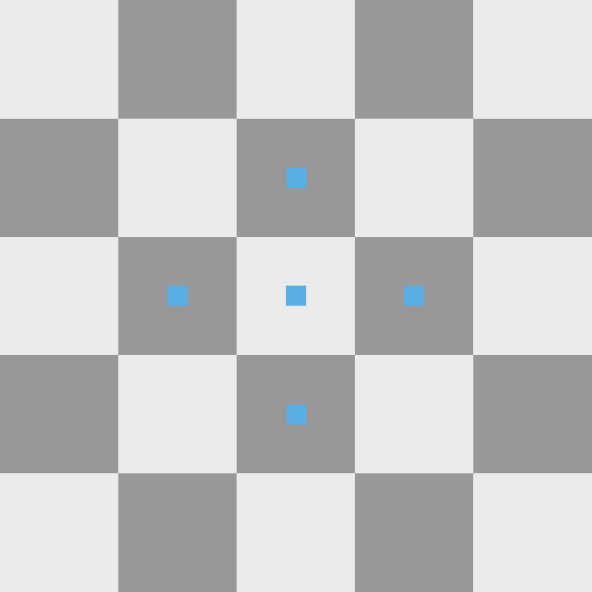
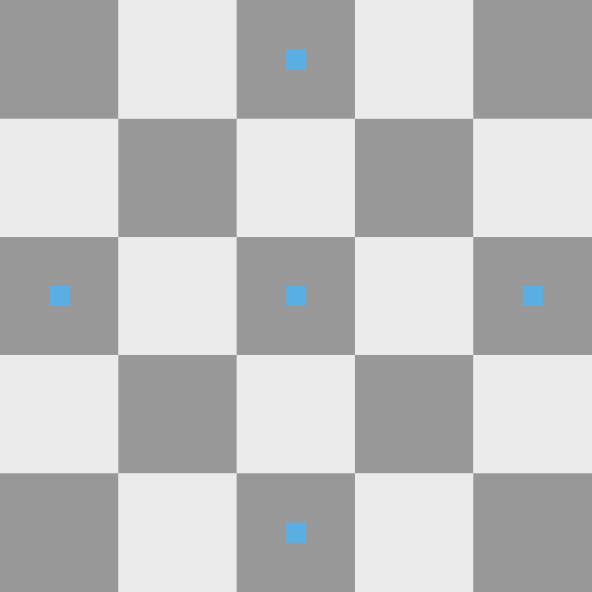
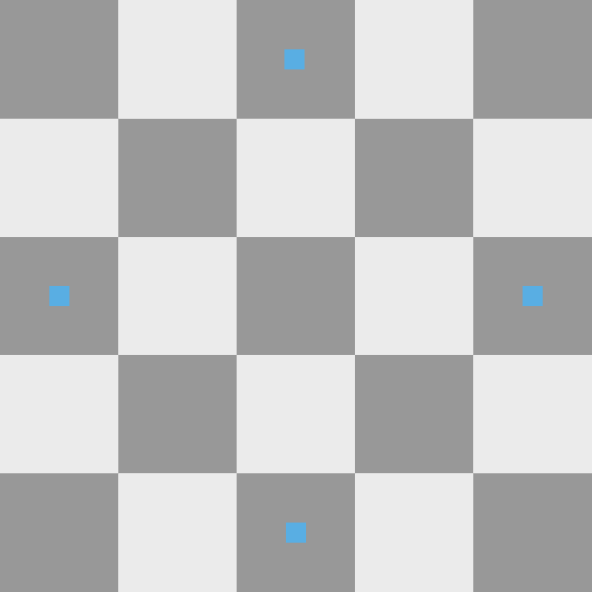
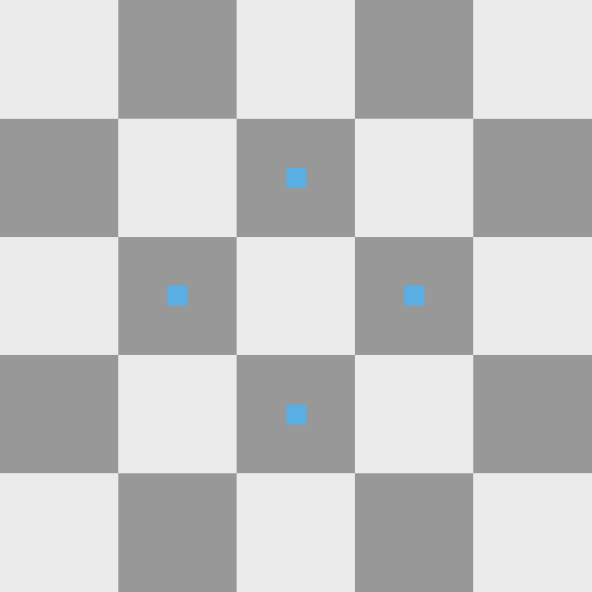
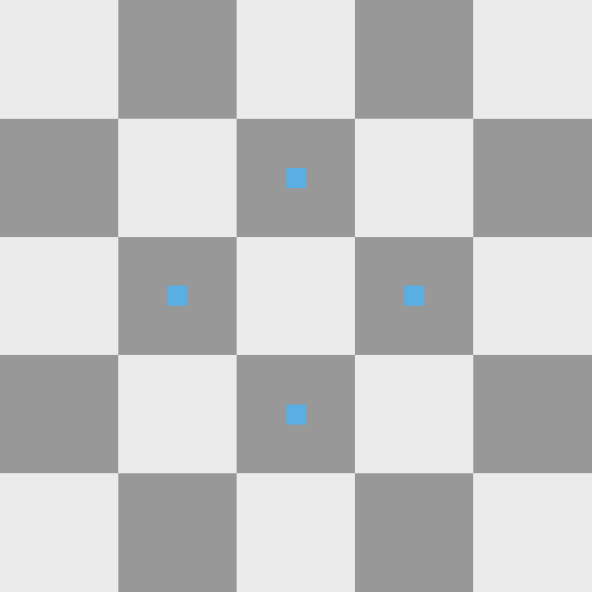
The five diagrams per piece always use the same order: Z+2, Z+1, Reference layer, Z-1, and Z-2. This makes movement across layers easy to compare.
King
The king is the most important piece: checkmate against the king ends the game.
- Move
- One square in any direction: straight, 2D diagonal, or 3D diagonal.
- Capture
- Like a normal king move onto an enemy-occupied target square.
- Blocking / jumping / sliding
- No jumping and no sliding: the king moves exactly one square. Own pieces block the target square.
- Color behavior
- Mixed; depending on direction, the square color may change or stay the same.
- Possible directions
- 26 directions, exactly one square each.
- Starting squares
- White E1–IV; Black E8–IV.
Movement diagrams


Queen
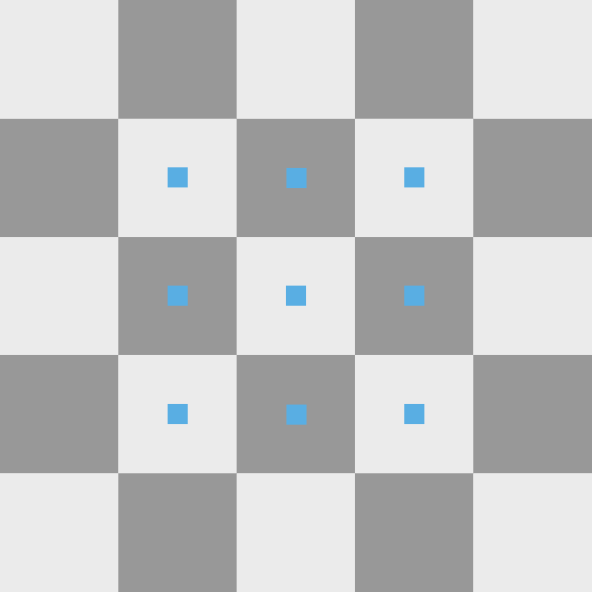
The queen is the strongest long-range piece and controls lines, plane diagonals, and true 3D space diagonals.
- Move
- Any distance orthogonally, along 2D diagonals, or along 3D diagonals, as long as the path is clear.
- Capture
- Along a clear line onto an enemy-occupied target square.
- Blocking / jumping / sliding
- Sliding piece: intermediate squares must be empty. No jumping.
- Color behavior
- Mixed; depends on direction and distance.
- Possible directions
- 26 directions: 6 orthogonal, 12 2D diagonal, and 8 true 3D space diagonals.
- Starting squares
- White D1–IV; Black D8–IV.
Movement diagrams



Duke
The Duke is a “queen light”: it combines rook lines and 2D diagonals, but not true 3D space diagonals.
- Move
- Any distance orthogonally or along 2D diagonals. True 3D space diagonals are excluded.
- Capture
- Like a sliding move onto an enemy-occupied target square.
- Blocking / jumping / sliding
- Sliding piece: intermediate squares must be empty. No jumping.
- Color behavior
- Mixed; depends on direction and distance.
- Possible directions
- 18 directions: 6 orthogonal and 12 2D diagonal, without true 3D space diagonals.
- Starting squares
- White E1–V; Black E8–V.
Movement diagrams

Bishop
The bishop remains the color-bound diagonal piece, extended to the three 2D diagonal planes XY, XZ, and YZ.
- Move
- Any distance along a 2D diagonal in XY, XZ, or YZ.
- Capture
- Along a clear diagonal onto an enemy-occupied target square.
- Blocking / jumping / sliding
- Sliding piece: intermediate squares must be empty. No straight lines, no jumping.
- Color behavior
- Always remains on the same square color.
- Possible directions
- 12 directions: 2D diagonals in XY, XZ, and YZ.
- Starting squares
- White C1–IV, F1–IV, E1–III, E1–VI; Black C8–IV, F8–IV, E8–III, E8–VI.
Movement diagrams

Knight
The knight is the tactical jumping piece and remains independent of blockers.
- Move
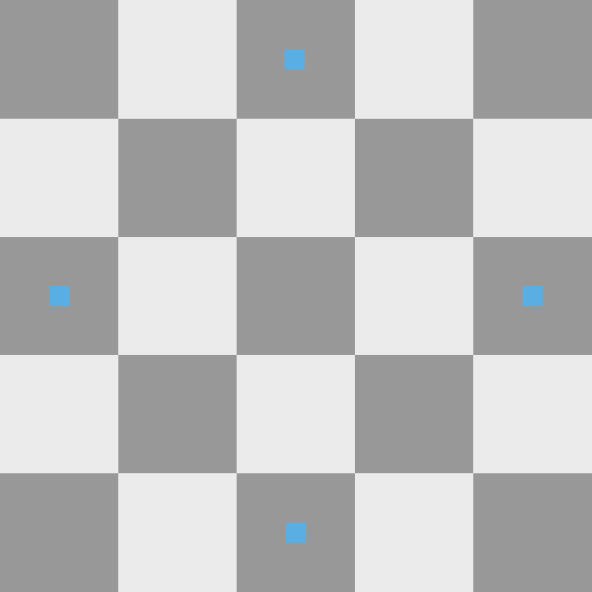
- A 3D L-jump with distances 2–1–0 in any axis order.
- Capture
- The knight captures by jumping onto an enemy-occupied target square.
- Blocking / jumping / sliding
- Jumping piece: intermediate squares are irrelevant. Own pieces block the target square.
- Color behavior
- Changes square color on every move.
- Maximum targets
- Up to 24 targets from a central position.
- Starting squares
- White B1–IV, G1–IV, E1–II, E1–VII; Black B8–IV, G8–IV, E8–II, E8–VII.
Movement diagrams





Rook
The rook controls the straight axes of the cube and is the castling partner.
- Move
- Any distance straight along X, Y, or Z.
- Capture
- Along a clear straight line onto an enemy-occupied target square.
- Blocking / jumping / sliding
- Sliding piece: intermediate squares must be empty. No diagonals, no jumping.
- Color behavior
- Mixed; depends on axis and distance.
- Possible directions
- 6 directions: straight along X, Y, and Z.
- Starting squares
- White A1–IV, H1–IV, E1–I, E1–VIII; Black A8–IV, H8–IV, E8–I, E8–VIII.
Movement diagrams





Pawn
The pawn remains the directed mass piece. As in classical chess, moving and capturing are deliberately different patterns.
- Move
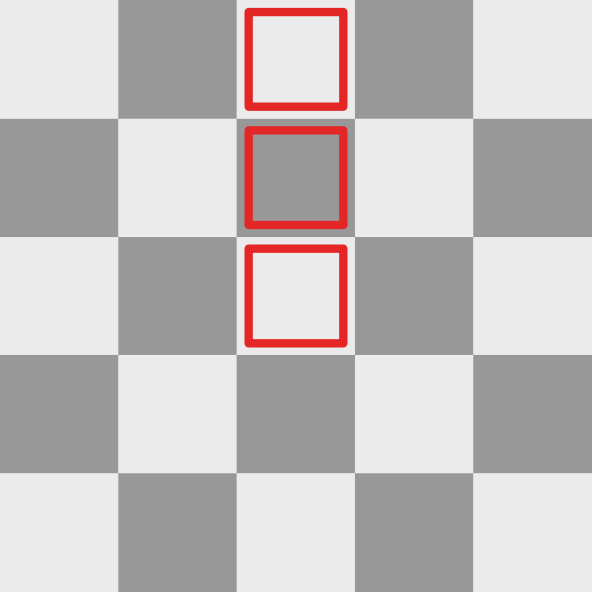
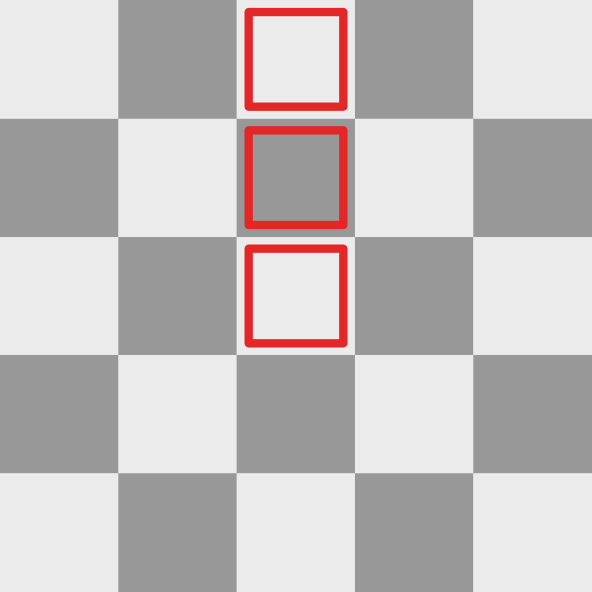
- White moves toward +Y, Black toward −Y, on the same layer. From the starting square, a double step is possible if the path and target are clear.
- Capture
- Pawns capture diagonally forward: classically by changing file, and in HDC also by changing layer.
- Blocking / jumping / sliding
- No jumping and no sliding. Forward squares must be empty.
- Color behavior
- A single forward step changes square color; captures stay on the same square color. The double step is a special starting move, as in classical chess.
- Maximum targets
- Up to 6 targets from the start: 1/2 forward plus up to 4 captures.
- Starting squares
- White all squares A2–Z through H2–Z for Z=I–VIII; Black all squares A7–Z through H7–Z for Z=I–VIII.
Movement diagrams



Pieces compared briefly
- Largest spatial control: Queen, Duke, Rook.
- Precise diagonals: Bishop, Queen, Duke.
- Tactical surprises: Knight and Pawn.
Mini FAQ
Is the new piece called Duke in both languages?
Yes. The piece name is Duke in both German and English. In current HDC notation, D means Duke; the queen is written as Q.
Why does the queen have more directions than the Duke?
Because only the queen also uses true 3D space diagonals.
Does the bishop remain color-bound?
Yes. It moves only along 2D diagonals and therefore remains on the same square color.
Does the knight still jump over pieces in HDC?
Yes. As in classical chess, intermediate squares do not matter for the knight.